Improving Emergency Inventory Management at Scale
Designing a mobile system to streamline supply tracking and reduce critical shortages across 100+ fire stations.
- Role · UX Designer and ResearcherTimeline · Multi-month engagementCompany · Los Angeles Fire Department
My Role
UX Designer and Researcher
Led end-to-end design of a mobile inventory management system. Conducted field research, synthesized insights, defined workflows, and designed a solution to support paramedics, captains, and logistics teams.
The Challenge
100+
Fire stations supported
Emergency response teams relied on inefficient, manual processes to track medical supplies and equipment.
This led to delays, inconsistencies, and risk of critical shortages in high-pressure situations.
Key Problems
- Manual inventory tracking across stations
- Time-consuming restocking processes
- Limited visibility into supply levels
- Delayed approvals for replenishment
- Risk of missing critical equipment in emergencies
The Goal
Design a system that would:
- streamline inventory tracking
- improve visibility across stations
- reduce time spent on manual processes
- support faster decision-making in critical situations
- scale across a network of fire stations
The Solution
I designed a mobile-first inventory management system that allowed paramedics and captains to track, request, and approve supplies in real time.
The system connected field operations with logistics workflows, improving speed and accuracy.
What Changed
- Digitized inventory tracking
- Simplified restocking workflows
- Enabled real-time visibility of supplies
- Streamlined approval process
- Improved coordination across teams
Design Process
From field research to a workflow that scales.
01
Discover
02
Define
03
Develop
04
Deliver
01
Discover
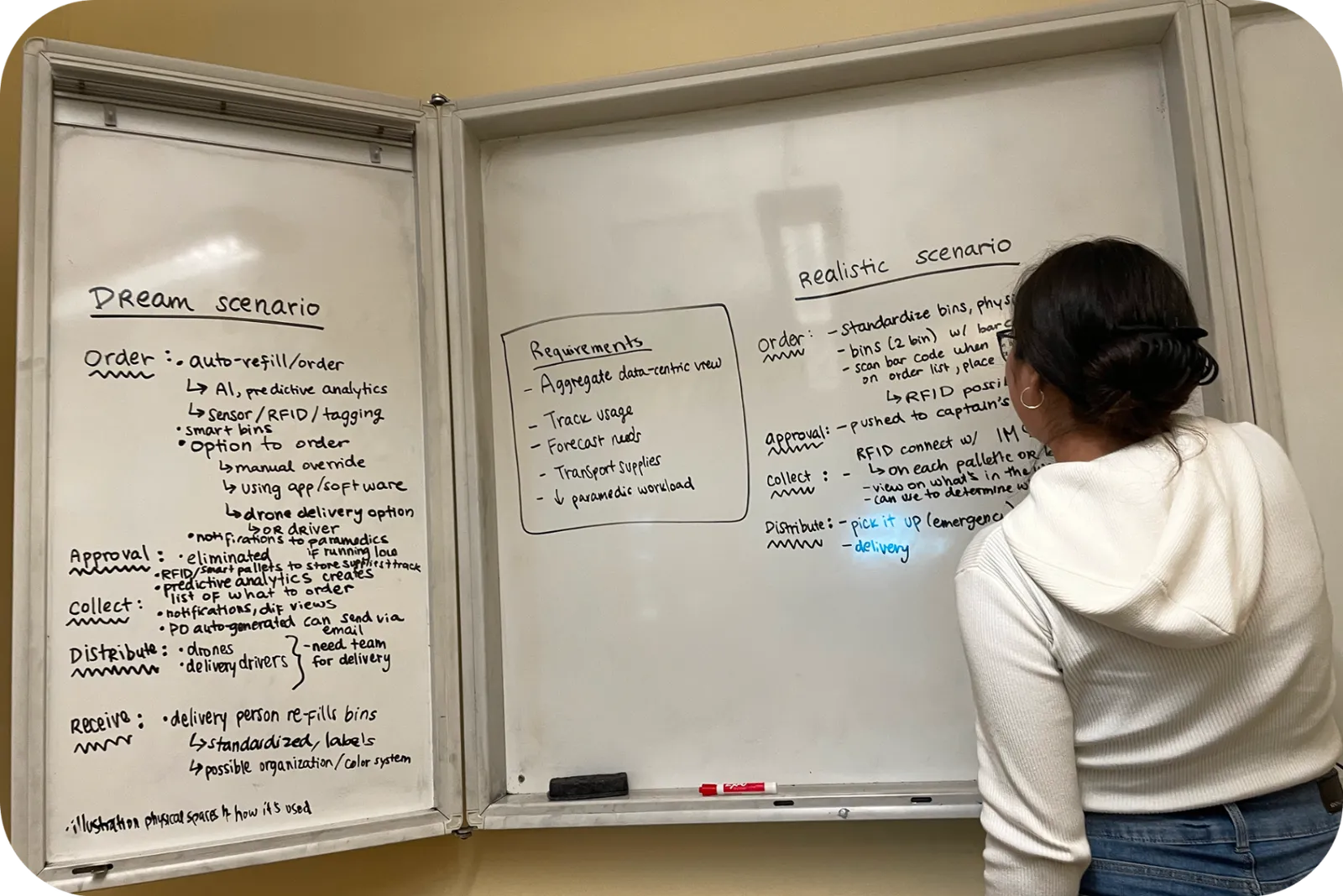
Field Research & Discovery
Conducted interviews and site visits with paramedics, captains, and warehouse staff to understand real-world workflows and pain points.
02
Define
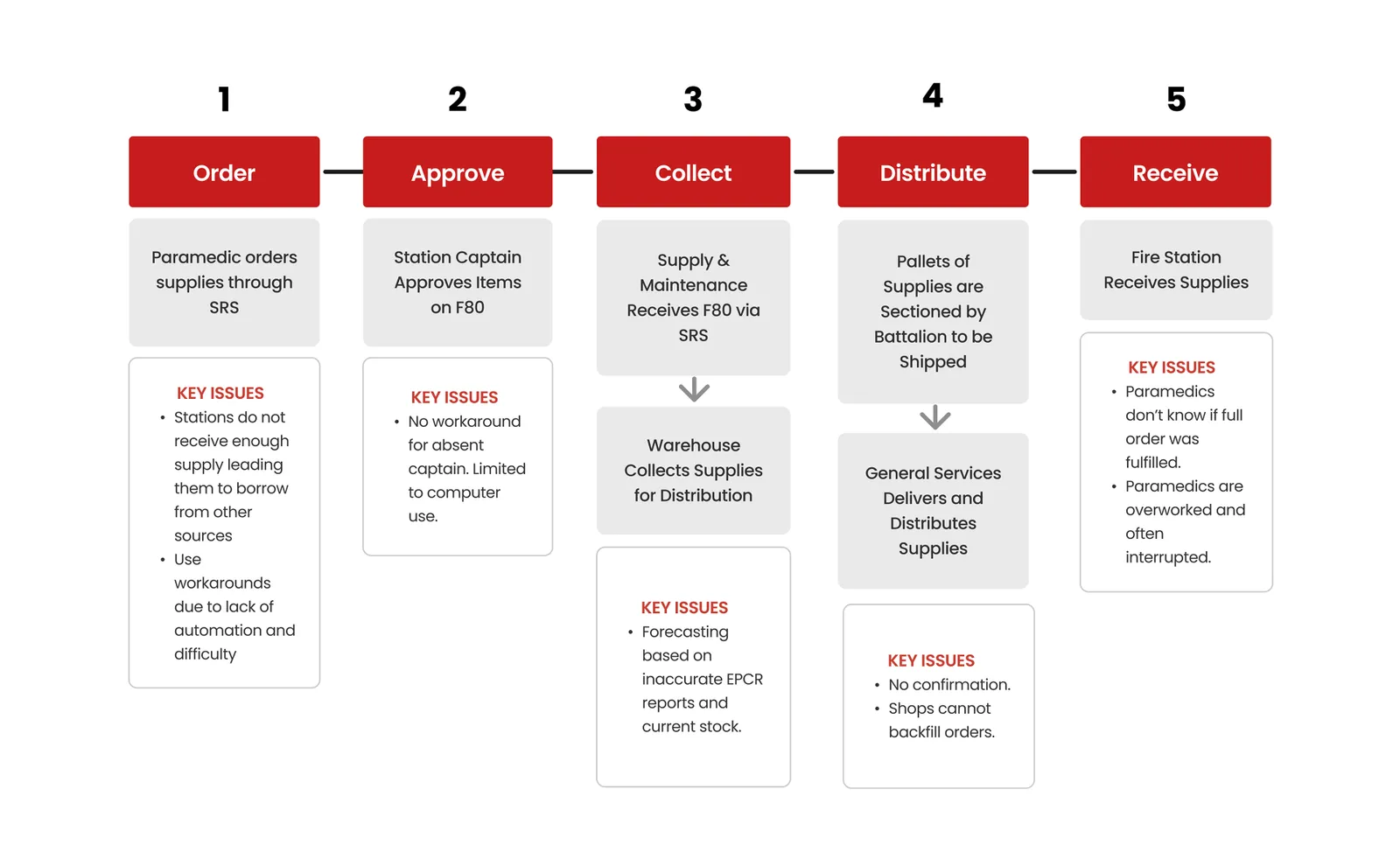
Mapping the Supply Chain
Analyzed each step of the supply lifecycle—from usage to replenishment—to identify breakdowns and inefficiencies.
03
Define
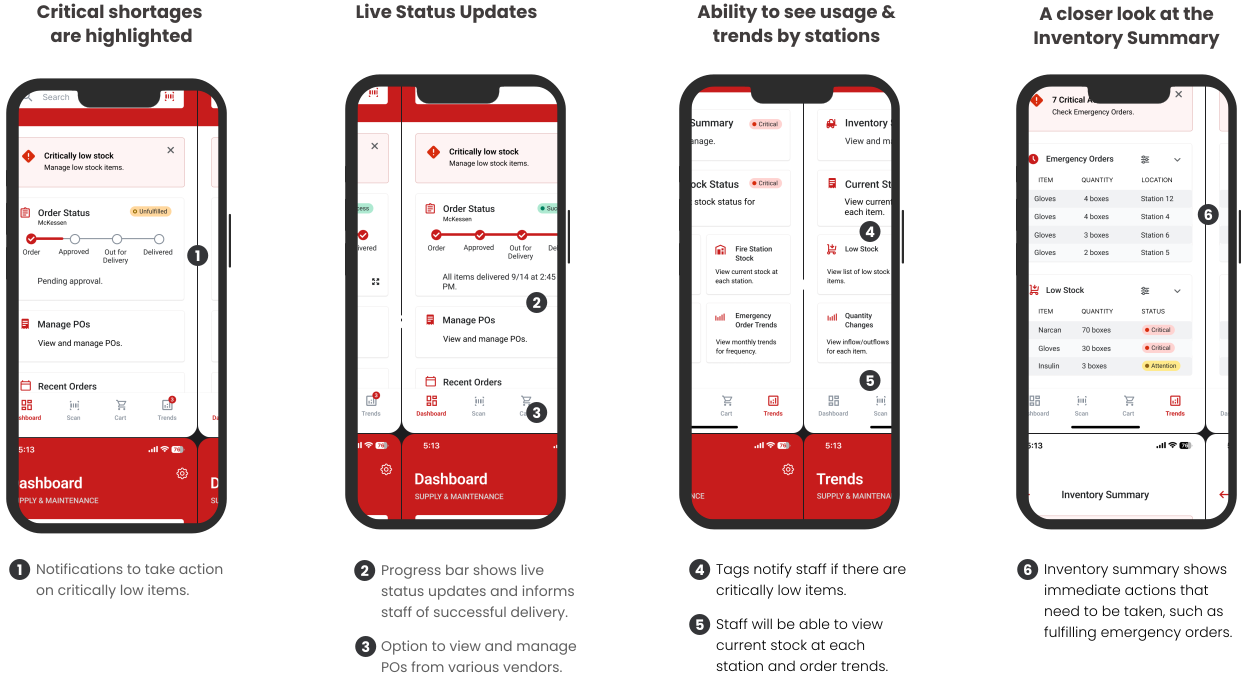
Identifying Key Opportunities
Focused on areas with the highest operational impact: tracking inventory in real time, reducing manual entry, improving request and approval speed.
04
Develop
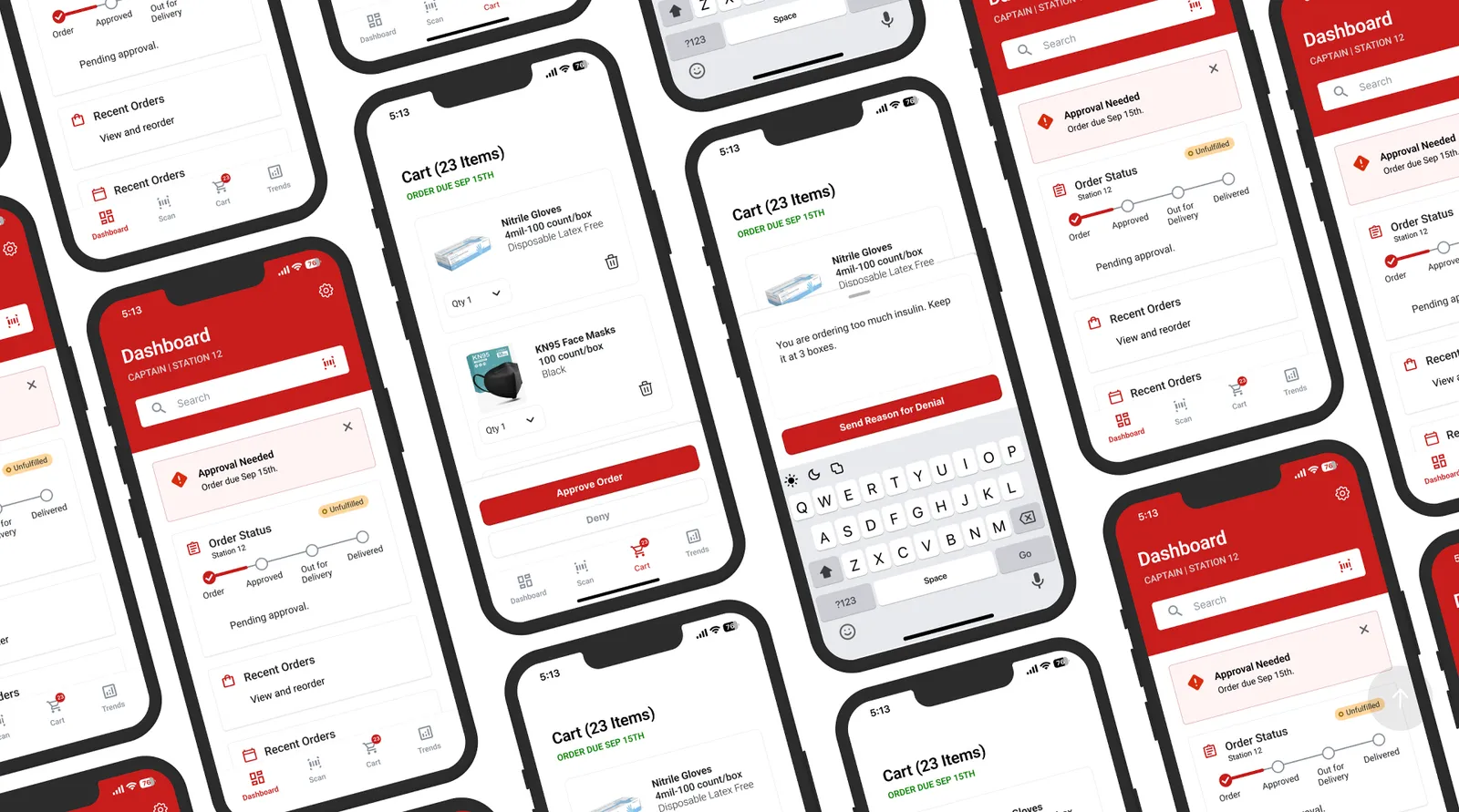
Designing the Mobile Experience
Created a simple, intuitive interface for paramedics to scan and log items quickly, submit restocking requests, and track order status. Designed a companion experience for captains to review and approve supply requests efficiently.
Constraints & Tradeoffs
The solution needed to account for real-world operational pressure.
- high-pressure emergency environments
- limited time for interaction
- varying levels of tech familiarity
- coordination across multiple roles
- operational and logistical constraints
Design decisions prioritized speed, clarity, and reliability.
What I Learned
“Designing for emergency services requires a deep understanding of real-world constraints and user behavior under pressure.”
This project strengthened my ability to: conduct meaningful field research, design for speed and clarity in high-stakes environments, connect multiple systems into one cohesive workflow.